The Detail Doc Blog
Ceramic Coating and PPF: The Right Order Matters (and What Happens When It Doesn’t)
(989) 244-0505 GET SCHEDULED NOWIf you are investing in premium paint protection, you have probably heard about ceramic coatings and paint protection film (PPF). Both deliver real benefits, but the best results come from pairing them correctly. When the order is wrong or the prep is rushed, the “layering” can fail. That failure usually shows up as poor bonding, streaking, premature wear, peeling edges, or a finish that does not look as clean as it should.
At
The Detail Doc, we see the same preventable issues again and again: PPF installed on paint that was not corrected first, ceramic coating applied before the film is fully settled, or coatings applied to the wrong surfaces with the wrong expectations. This guide explains what each product does, why order matters, the most common mistakes, and how to protect your investment long-term.
Key takeaways (read this first)
- PPF should typically go on before ceramic coating when you want impact protection plus easier maintenance.
- Ceramic coating can be applied on top of PPF, but only if the film is properly installed, the surface is properly prepared, and the right coating is used.
- Prep work is not optional. Paint correction and clean surfaces are what make protection last.
- Cheap shortcuts often lead to expensive rework. If the layers fail, you may pay for removal and reinstallation.
What ceramic coating does (and what it does not do)
A ceramic coating is a liquid-applied protective layer that chemically bonds to your paint (or to PPF) and cures into a hard, slick surface. Its biggest benefits are:
- Easier washing because dirt and grime do not stick as aggressively
- Improved gloss and clarity
- Chemical resistance against contaminants like bug residue, bird droppings, and road film
- Reduced water spotting (not elimination) and improved hydrophobic behavior
Ceramic coating is not impact protection. It does not stop rock chips. It can help reduce micro-marring from improper washing, but it will not “armor” paint against road debris. Think of ceramic coating as a high-performance surface layer that makes your vehicle easier to maintain and helps preserve the finish.
What PPF does (and what it does not do)
PPF is a thick, transparent urethane film applied to painted panels. It is designed to absorb and disperse impacts that would otherwise chip or scratch paint. Many modern films have self-healing properties that reduce the look of light surface scratches under heat.
PPF is especially useful in Mid-Michigan, where gravel, winter road treatment, and highway driving can be hard on paint. It is one of the most effective ways to protect high-impact areas like the front bumper, hood, fenders, mirror caps, rockers, and door edges.
PPF is not a replacement for good maintenance. It can stain if contaminants sit too long, and edges can lift if the film is installed incorrectly or if the vehicle is washed improperly immediately after installation.
Why order matters when combining PPF and ceramic coating
Layering only works when each layer is installed under the right conditions. The general best-practice approach is:
- Correct and prep the paint
- Install PPF on the panels you want protected
- Ceramic coat the painted surfaces and the PPF (when appropriate)
This order matters because PPF needs a clean, corrected surface to bond properly. Ceramic coating also needs the right surface conditions to bond and cure. If you coat first and then apply PPF, the film adhesive is trying to bond to a coated surface, not paint. That can reduce adhesion, increase edge lifting risk, and create long-term durability problems.
Correct installation steps (the professional process)
Below is the process The Detail Doc recommends for most vehicles when the goal is maximum longevity and a clean, high-end finish.
Step 1: Wash, decontaminate, and assess
Every job starts with a thorough wash and decontamination to remove bonded contaminants. This often includes iron removal and clay treatment, followed by inspection under proper lighting. If contamination remains, it can interfere with bonding and lead to visible defects under the protection layers.
Step 2: Paint correction before protection
Paint correction is the stage that most people try to skip, and it is the stage that makes everything look right. Swirls, haze, and light defects do not disappear under PPF or ceramic coating. In many cases, they become more noticeable because the finish is now sealed and glossy.
Correction is also about creating a consistent surface so protective products can bond uniformly. A vehicle does not need to be “perfect,” but the paint should be clean, smooth, and corrected to the client’s goals before sealing it.
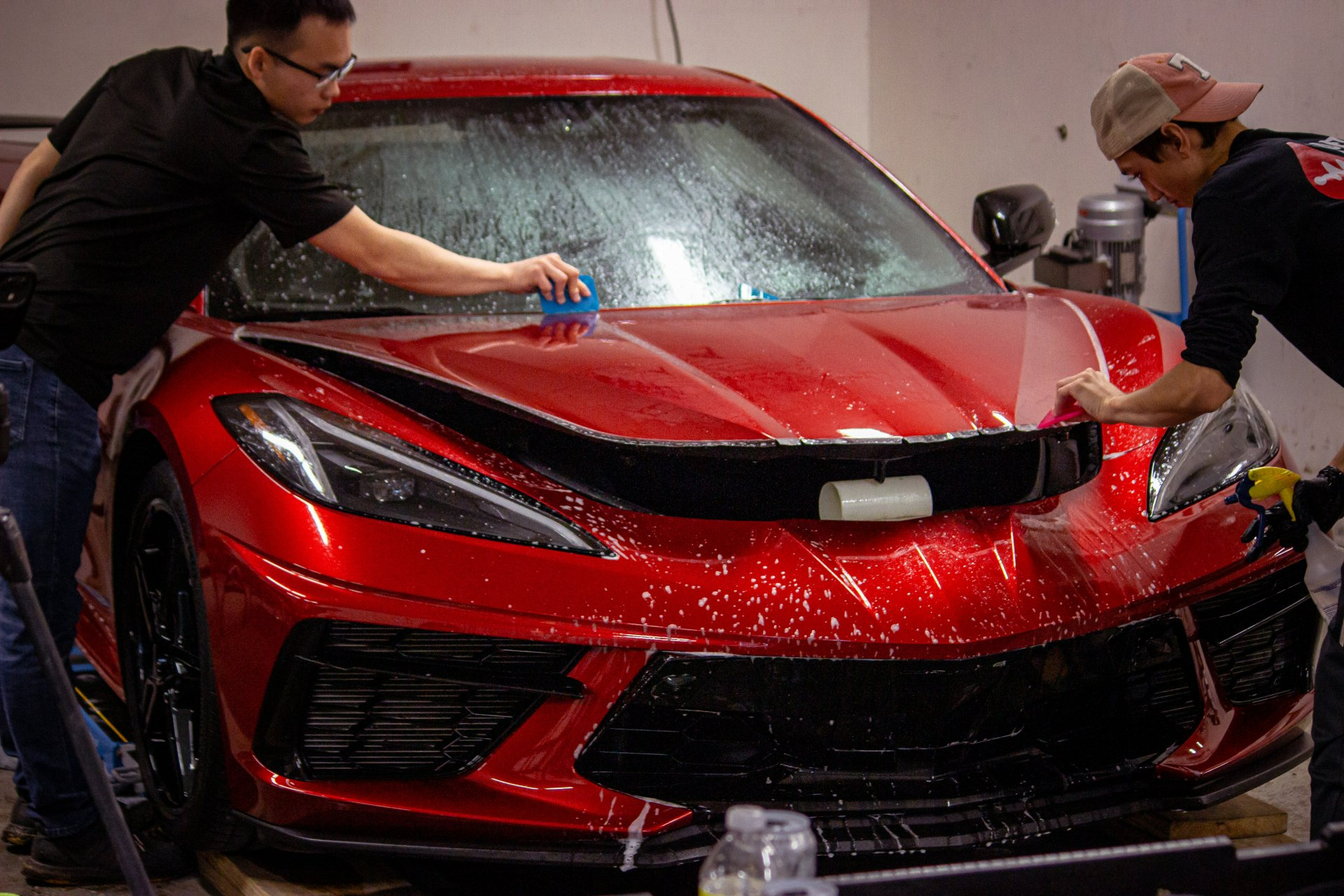
Step 3: PPF installation on priority panels
PPF is applied to the panels that take the most abuse. Common coverage options include:
- Partial front (bumper, partial hood, partial fenders, mirrors)
- Full front (bumper, full hood, full fenders, mirrors)
- High-impact plus (rockers, A-pillars, door cups, luggage area)
- Full-body coverage for maximum protection
After installation, the film needs time to settle and adhere properly. Light haze from installation moisture can be normal at first. Edges should be protected and handled correctly during the early cure period.
Step 4: Ceramic coating on paint and PPF (if appropriate)
Once the film is installed and stable, a ceramic coating can be applied to:
- Exposed painted panels
- PPF surfaces
- Wheels (optional but recommended for cleaning ease)
Not all coatings are ideal for film, and not all shops apply the right product to the right substrate. A proper film-safe coating improves slickness, makes washing easier, and helps keep PPF looking cleaner over time.
Step 5: Final inspection and owner guidance
The final stage is a finish inspection, a cure discussion, and clear maintenance guidance. This is where long-term results are protected. Even the best protection can be damaged by harsh chemicals, automatic brushes, and improper wash methods.
Common mistakes that cause “layering failure”
These are the problems that most often lead to poor results and rework costs.
Mistake 1: Applying ceramic coating before PPF
Coating paint first and then installing film often reduces adhesive performance. This can show up as lifting edges or failure around tight curves. It can also create a bigger problem later because removing the film may pull coating unevenly or leave residue that complicates corrections.
Mistake 2: Skipping paint correction
If paint is not corrected first, defects remain trapped under protection. Customers often think something “went wrong” with the film or coating when the real issue is that the paint was not refined before sealing.
Mistake 3: Rushing cure time
PPF and ceramic coating both need proper time and conditions to settle and cure. If you wash too soon or expose the vehicle to harsh environments too early, you can cause streaking, water spotting, or edge issues.
Mistake 4: Using the wrong chemicals for maintenance
High-alkaline cleaners, heavy degreasers, and aggressive solvents can degrade coatings and stain film. The right maintenance products protect your investment and reduce wear.
How to maintain ceramic coating and PPF the right way
Protection is not “set it and forget it.” It is “protect it and maintain it correctly.” Here is what we recommend:
- Hand wash using the two-bucket method and a quality microfiber wash mitt
- Use pH-balanced soap and avoid harsh degreasers unless instructed
- Dry with clean microfiber towels or a dedicated drying tool to reduce marring
- Remove bug splatter and bird droppings quickly, especially in warm weather
- Avoid brush-style automatic car washes
- Schedule periodic inspections if you drive heavily in winter conditions or highway environments
If you are unsure what to use, The Detail Doc can recommend safe products and routines for your specific coating and film combination.
FAQ: Ceramic coating and PPF
Can you apply ceramic coating over PPF?
Yes, when the PPF is properly installed, the surface is correctly prepped, and a film-safe coating is used.
Should PPF go on before ceramic coating?
In most cases, yes. Installing PPF first allows the film adhesive to bond to clean paint, then the coating can be applied to both the film and the remaining paint.
Will ceramic coating prevent rock chips?
No. Ceramic coating helps with cleaning and chemical resistance, but rock chip protection is the job of PPF.
Is PPF still worth it if I ceramic coat the car?
Yes, especially for high-impact areas. Coating makes cleaning easier, but PPF protects against physical impacts that coatings cannot stop.
Protect your vehicle with the right plan
If you want your protection to last and look great, order and workmanship matter. The Detail Doc helps drivers choose the right coverage, install it correctly, and maintain it confidently through real-world Michigan conditions.
Serving Bay City, Saginaw, Freeland, Midland, Frankenmuth, Bridgeport, Birch Run, Clio, Fenton, and Shields. Visit
thedetaildoc.co or call 989-770-3551 to schedule a consultation and build a protection plan that fits your vehicle and budget.
The Detail Doc Blog